
Audio tape from the Joe Brazil collection containing A Love Supreme recorded October 2, 1965 in Seattle.

On October 3, 1989, Paul de Barros interviewed Joe Brazil for Jackson Street After Hours. Paul shared a 50-page transcript with me and Virginia Brazil gave me permission to publish it. Below is an excerpt where Brazil talks about Coltrane.
PdeB: How did the "Live in Seattle" session come about?
JB: Oh, "Live in Seattle" was a thing that was really associated with “Om.” Now, "Live in Seattle," now I'm not sure when that was recorded. What I mean by that is we were playing the same way all week. I sat in with 'Trane during the entire week there, because 'Trane stayed with me in Detroit when he first got his band together. And I gave him a map to get to California. At that time he had McCoy Tyner on piano, Steve Davis, I think, was playing drums and Reggie Workman was playing bass…yeah, the Coltrane original quartet.
But anyway, so, in the meantime, before that, [there were] several times when he'd come through with Cannonball [Adderley], I mean with Miles [Davis], you know. We'd hang out, chat, talk, discuss music and that kind of thing. And so we traded a lot of ideas, and that kind of thing, so usually, four or five of us saxophone players would be together. It'd be Yusef [Lateef], Joe Henderson, myself, [Kenneth] “Koko” Winfrey and 'Trane. And we'd just practice, and talk, and whatever, you know – and share ideas, you know? 'Trane was always absorbing as well as giving. He was very open to stuff, but he was also—“What was that?” you know? He’d tell you what he was doing. You ask him what he was doing, but he was like learning, you know, in a sense not so much learning but absorbing, we'll say, as much as he was sharing. He was a guy who was relentlessly practicing. He practiced six, seven, eight hours a day.
PdeB: So, when he came out here, he was staying with you.
JB: Oh, yeah. A couple of times. Yes. Sometimes he came with bands. When he came with Miles, he stayed with the band or stayed with the hotel. We'd just get together. When he came out with his own band, then he’d stay with me.
PdeB: And that was that week at the Penthouse?
JB: Ummmmmm. No, no, no, no. When I say stayed with me, I'm talking about in Detroit.
PdeB: Oh! Okay. I'm sorry.
JB: I do that, too, sometimes too. I'll get on the microphone and say Detroit even though I’m in Tacoma, only staying one year. I don't know if I've ever made the shift yet. (laughter from both) It's really kind of strange.
PdeB: So out here how did the session come together?
JB: Oh! The "Live in Seattle" thing. I think what happened is that we were reading the Bhagavad Gita. I had about 10 versions of the Gita, the Hindu Bible. And 'Trane was interested in some of those versions that I had. Now I never did know really what his background was as far as studying different philosophies and religion, that kind of thing, but we’d start chanting “om” one day, at the gig, on these oms, we're playing. We had two bass players at the time. Who’s the guy in Chicago who’s playing bass on that? I can't think of the player. He's kind of an avant-garde-ish player, too.
PdeB: It's uh… it's uh… Oh, and he also had two names.
JB: Right. He had another name too. Played clarinet a little bit… I can't even think of his name. But anyway we – of course, Elvin and Jimmy Garrison. Donald Garrett.
PdeB: There we go. Garrett.
JB: Donald Garrett. We had two bass players, a drummer, plus McCoy, 'Trane and myself, and Pharoah Sanders was also on the gig. So, just during the week, I had the privilege of sitting in with him most of that week, he invited me up. Now, talking about avant-garde playing, which we were kind of doing at that time, newer sounds, at least. And I call myself – I didn't really know what I was doing. I'm trying to play new, you know? and 'Trane said, "Oh wow! You sound just like we do.” And I say, "Well, not to me." (laughter from both) But I did a couple of, just, of our own recordings…I think I may have some tape of that somewhere if I can find it. But I didn't even know that was being recorded for a recording then. So they probably – somebody either just took some recordings or did some recordings live at the club. But it was it similar to [inaudible] a studio to do “Om” That was done in Woodinville, Washington. It was the only guy, at that time, who had some kind of recording studio. In other words, the big studios [that are now] downtown didn't exist at that time. ‘Trane was looking for a place to record, and I don’t know how we found this place. I can't even think of the guy's name who recorded it.
PdeB: I've talked to him –
JB: – Yeah, right, it was in Woodinville, or somewhere, in his garage?
PdeB: He lives up in Everett now.
JB: Yeah, but I think this recording was done…
PdeB: Was it Woodinville? I don't know.
JB: It was someplace up in Washington. And it was in his garage.
PdeB: Or Lynnwood?
JB: Lynnwood!! Maybe it was Lynnwood. But he had a little garage or something he had set, he had a big room and had all these little mics and stuff. And we went out there to record. In fact, we rode out in a Chrysler, because I drove out here. My old Imperial. The thing that's kind of interesting, the door had a real loud squeak on it. You open it,” e-r-r-r-r!” Needed oiling I guess. And 'Trane loved the sound of that squeak. He was thinking at one time to running a microphone out and have somebody just opening and closing that door – while we were recording. But we never did it. But somehow, he was fascinated by the sound of that door. “E-r-r-r!” Some pitch, you know? And the ironic thing about it is the door had a problem. And it got closed, jammed one time. And I don't think the door ever really got opened any time since then, I mean [it was an] old car, it’s been sold and junked – I was going to save it, and restore it – but anyway, that door was for many years never even opened anymore. It got jammed shut. Maybe that was some kind of omen.
PdeB: Yeah.
JB: So apparently they recorded that in the studio, but it's something like “Om,” kind of, you know, in a sense. That free-ish thing. You just played for what? 40 minutes? Or 50 minutes? whatever it turned out to be, you know.
PdeB: Now this guy who taped “Om” says that there's also all these out-takes of that session.
JB: Out-takes? Meaning what, now?
PdeB: Just other stuff that didn't come on the record.
JB: Oh! Oh! Oh yeah, probably. Yes. Right. Yeah. But I even did a solo on it on flute. You see I played a wooden flute of Coltrane's on it, too. And I don’t think – well I know the introduction part is still there, because as they were doing this talk, or when he was reciting, I guess you would say, from the Bhagavad Gita, I was playing the flute part on it, yeah. But it seems like there were some other things on there, too.
But I was thinking of another kind of a rock 'n roll – not so much rock 'n roll but pop songs that I did some recording on soprano with, who’s the vibes player? He had all these guys, all Virgos, I’m a Virgo, too [inaudible]. What the heck is his name?
PdeB: Here?
JB: Yeah, right. We recorded it in Seattle, and it's called – not "Maiden Voyage" but something like a voyage. "Mystic Voyage." But who's the vibes player?
PdeB: Not [Tom] Collier?
JB: No, no, he's not from here, he's a national artist. But he's not quite a jazz – he did play very good jazz at one point, and he played with a lot of national people. But he kind of went into a kind of a commercial sound and I can't think of his name now.
PdeB: Tjader?
JB: Not Cal Tjader. It's a Black dude. What the hell is his name? He travelled around quite a bit and he kind of – for a while, didn’t they do this make-up thing for a while? Making their faces all…? But he was actually a good jazz vibist, too, and he played with – seemed like he – even though Tjader was a vibes player, seems like he played with Tjader at one point or something like that. I don't know whether they had two vibes, or something. I think he played on piano. But I can't even think of his name now. Roy…
PdeB: Ayers!!
JB: Roy Ayers. Yeah, right. He used to be in my class and all that, too. And I recorded with him, called "Mystic Voyage." I did soprano on that record, right. But it was one of those things where the group is singing and all that too. You were talking about out-takes, I did some solos on that one, but they were edited out.
PdeB: Well, the reason I mentioned it is that what we hear is that Impulse is going to bring out MCA's –
JB: Oh, Impulse got the whole thing.
PdeB: You already know about it?
JB: No, I don't know. I know Impulse got the whole thing because it was recorded on Impulse. I know it was released on Impulse - by accident. Did you –?
PdeB: – No, I didn't know that.
JB: You didn't hear about that? That's what I heard. I heard that somebody had sent for “Kulu Sé Mama” in Europe, somewhere. And somehow this take got in the jacket, by mistake. And somebody heard this and said, "What is that?" And somehow, they liked it. "Well, it sounds okay to us." And I don't know if it got released in Europe first or whatever, but then after somebody say, "Oh, that's great. Give us some more," whatever, you know, then they finally released it here, but I think it was an accident that it got released, at least [that’s] what I heard –
PdeB: – "Om" or "Live in Seattle"?
JB: "Om." That's what I heard, I’m not sure. I don't even know where even I heard that story from. But I used to talk to 'Trane occasionally on the phone, you know. We’d chit-chat, talk about this that and the other, you know?
PdeB: When that session happened, were you surprised by the music they were making?
[23:36]
JB: Oh, very much so. As a matter of fact, I've even talked to McCoy about it. And others. But you don't really remember the occurrence, you're so involved in the music, you're almost like you’re in a different state of existence or being. And it happens quite often when you get in those [inaudible] of complete creativity, you're almost like taken out of the scene. And I think that happens quite often with jazz musicians. People be looking at them and sometimes they’re going through various gyrations, you know. But when you're really involved in the music, you're not aware of the audience or self or whatever because everything is clicking as a harmonious group.
Now, mostly in the commercial scene you're trying to see who's laughing, who's buying beer, you know, you're trying to make sure everybody’s happy and all that kind of thing. But when you're really creating on a higher level like that, sometimes – and I guess 'Trane had done it many times, and I’ve had the good fortune, a few times, you know, of reaching that state. So you don't really recall it totally, at least I don’t. and McCoy said he didn’t.
'Trane didn't want to hear it back mainly because, he says, "Well, I just don't want to be influenced by those kinds of things." But one time he says, "I've often wondered what I sound like." He was very conscious of wanting the people to enjoy the music. But he said, “I've often wondered what music would sound like – what my music would sound like – if I heard it the first time.”
Because one kind of incidence – did you see Jim Wilke's picture in there?
PdeB: I have that magazine. Yes.
JB: With him, with the classic cap?
PdeB: Yes. Yes.
JB: But I remember Jim Wilke at the Penthouse when 'Trane was playing there. And so he said, “You know he sounds like he's angry to me." And I said, “Well no, it's not anger, you know, I mean you may, you may – I think what happens is you're coming from a perception of where you are at the moment." You know what I mean? But, because some people may look at that music as hostile, you know, because the way jazz musicians are –
PdeB: – Oh, a lot of people did, I remember.
JB: You know, these cats slobbering (laughter) and whatever else, you know. “Oh, those guys were pretty mad!” No, but what you're trying to do is you’ve reached another state of consciousness and you’re trying to do, and somehow you – maybe you take it out of body. You’re just creating to the fullest of your thing. And it's really enjoyable. It's not painful, you know what I mean? I mean you're in a state of being where you're really exhilarated. You’re really enjoying what you're doing, at least as far as what I can kind of feel myself. And so, it may appear, because of the – you’re striving, whatever you're doing, you’re grimacing, and you’re looking strange, you know, and to that, it seems like pain to some other people outside, because when we [are in] pain when we do that. But no, it's no pain at all, really, it's maybe a striving to do better. Because I think 'Trane and Dizzy and Miles and whoever are trying to reach a certain sound that will reach a certain center of consciousness that could make people more aware, more friendly, better, make the universe, make the – at least the country, a little bit better, the earth a little bit better. So, I think that was really the motivation for them doing some of the things they were doing. You know, the Albert Ayler’s, and those kind of people who’ve done that kind of thing, and probably any musician that is really into his music that way – even guys like Barry Harris, or Tommy Flanagan, you know.
PdeB: But you were one of the people who brought that consciousness here. It's real clear to me.
JB: I wasn't aware of that. That's the first time I've heard of that. I mean I never even thought about that.
PdeB: That music could heighten your consciousness and that it was really a concentrated effort to do that. I'm curious –
JB: – I never knew that.
 |
| My tribute to Brazil's story |
But he is not the first dead musician to mentor me. First, was John Coltrane. He died in 1967, when I was seven. About 11 years after he died, I finally heard his music on a record and was entranced. The song that first got me was “Village Blues.”
[Band plays Village Blues quietly]
John Coltrane had been studying Spirituals - the simple melodies sung by slaves gathered in a circle after church services. The words spoke of hardship and freedom. Even though the subjects were often biblical, the meaning was personal – someday freedom will come. The rhythms were slow and repetitious, like the work songs used to row, dig, plant, and pick. They were chants that entranced the singer to give strength. The communal music could endure long hours, harsh conditions, brutal oppression. Spirituals fed the soul.
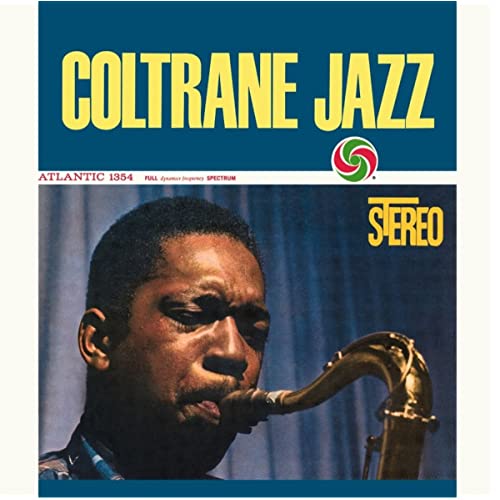 |
| "Village Blues" on Coltrane Jazz |
That sound caught my heart and became one of my favorite things. Although my psyche was naïve to the wound of slavery, the music embodying the human spirit that endured that oppression awakened empathy to those struggling for freedom. Under the spell of the sound, I would search all my life to get close to its source – and dedicate my life to music.
I listened to every Coltrane record I could find. I wanted to play music with that deep vibe, music that put you in a trance and evoked a weighty sincerity. The things that stood out to me were the sound of the whole band, that everyone played an equal part – supporting each other so that the music surpassed any individual talent, and that the sound was a musical abstraction of feelings, events, and people.
[Band stops]
So when I moved to Seattle, I wanted to find out about the time that Coltrane played here. Coltrane came to Seattle in 1965 to play a week at the Penthouse, a jazz club at the corner of 1st and Cherry. He paid out of his own pocket for a live recording at the club and another in a Lynnwood studio. The music sounded crazy. People were chanting, drums bashing, horns squealing. I couldn’t pick out any recognizable melody or form. It sounded like freedom – spirits unleashed. Emotive motifs turned up to 11!
There was one name on the record I had never heard before, Joe Brazil. Who was he? How did he get involved with Coltrane? What was he doing in Seattle? What was this music about? I was used to learning about famous musicians through lots of commercial recordings. Who was this obscure person? What could I learn from him? I made it my mission to find out.
 |
| Coltrane's cigarette burn on Brazil's low "A" |
But the story of Joe and Coltrane starts ten years earlier in Detroit. Before Motown, there were the roots of Rhythm and Blues, Boogaloo, and Jazz.
[Play Detroit]
1950’s Detroit was a hot bed of jazz. The best musicians from New York had to practice before traveling there because the level of skill in the bands at the local venues was so high. Like many Detroit musicians, Joe Brazil was working at an auto factory during the day. At night, he listened to records, practiced, hit the clubs, and sat in with some of the best artists in the world. He set up his basement with a piano and invited musicians to come over and jam. Joe’s basement was where local musicians rubbed elbows with the touring talent in all night sessions outside of public view.
 |
| The basement entrance to Brazil's Detroit home |
Shouts, chuckles, and grins erupt when the soloist shifts into a higher gear and breaks free of inhibition. You see, it takes courage to put your sound on display for other musicians. Another soloist demonstrates a new technique. Intense practice has added new language to the improviser’s vocabulary and the jam session is a chance to display wit and cleverness while using those words in a musical sentence. A third soloist finds in their instrument a deeper spiritual quality of the human voice that embraces the joyful pain of living. Tone is everything. It binds the listener and performer at the most intimate and primal level.
A tall man, more like a boy, hunches over the shoulder of an upright bass, glistening forehead turned to watch the spidery fingers of his left hand dance up, down, and across the web of four parallel strings. The tips of his calloused fingers scissor rapidly like an archer sending volleys of sonic arrows into the bulls-eye hearts of chords prancing out of the piano. Another musician prays over the keyboard, sweat dripping on the ivories; his hands jab at clusters of notes to illuminate the path of the music, pointing to alternate routes, encouraging, tantalizing, and teasing the soloist.
Behind the drums, a man stares at the ceiling, his mouth gaping, his right hand shaking a stick that jitterbugs across a cymbal. The soloist, a saxophonist, stands still, eyes fixed on infinity, ears awash in improvisation. He tastes the bamboo reed and metal mouthpiece, and fills the room with his breath, fingers tapping out the ancient code he heard on a Charlie Parker record. Everyone in earshot receives the message – this guy dug deep into the record grooves and is sharing the jewels with his community. Most understand. The novices on the stairs crease their brows to place the notes. Where have I heard that before? Where is he going with this? Did you hear what the piano player just said? Man, I need to go practice!
At the top of the chorus, the saxophonist punctuates his phrase and turns to the trumpet player to his right. Within seconds, the trumpet echoes the saxophonist’s phrase, twisting, deconstructing, re-assembling the idea to fit the morphing chords of the song. But his sound is lower, quieter, less agitated because that’s his nature. His spirit comes out through the bell of his horn. He is finding his voice.
That’s why you are here. You open your instrument case, put it together, and gently blow warm air through the horn.
The trumpet player meets your eyes to pass the baton.
[Play Bebop in the Basement]
A frequent visitor to Brazil’s basement was saxophonist John Coltrane. Coltrane would come to Detroit many times in the 1950’s with Miles Davis and want to practice during the day and after the gig. Miles’ bass player Paul Chambers had lived at Joe’s house before joining Miles’ band so Coltrane found out about Joe and started using Joe’s house as a place to work on music when he was in Detroit. By the time Coltrane was bringing his own band to Detroit, Coltrane skipped the hotel entirely and stayed at Joe’s house. Coltrane, Brazil, and a handful of other saxophonists would share ideas, practice, and learn together in an informal but serious setting. I think this casual but passionate and collective way of learning would serve as a model for Joe’s teaching style in the future.
 |
| The site of some recordings by Brazil |
He also taped jam sessions at his home. Joe left behind a trove of audio tapes that document an important chapter in the development of the music and musicians that went on to achieve legendary status. I hope that one day the public will be able to hear this candid and intimate sound of informal music making. Joe and the few people who have heard these tapes are no longer with us. In Joe’s tape collection, I found one box labeled 3am Thanksgiving 1960 with the names John Coltrane, McCoy Tyner, and others. Coltrane and his band were in Detroit that week and staying at Joe’s house. I let my imagination ponder how that could have sounded.
[Play Thanksgiving]
By the end of the 1950’s, industrial work slowed in Detroit. Joe spotted an advertisement on the factory bulletin board – Boeing in Seattle was hiring. Joe got a job as a tool and die maker and moved out just as Century 21, the Seattle World’s Fair, got underway.
The contrast between Detroit and Seattle was stark. Joe stayed at the Y downtown and when he looked out his window he said to himself, “Where are all the black people?” Seattle was and still is one of the whitest cities in America. Joe had to search for blacks here. In other American cities, musical community leaders had wider influence – Horace Tapscott in Los Angeles, Julius Hemphill in St. Louis, Muhal Richard Abrams in Chicago. But Joe had migrated to a city with a small black community, so his influence was constrained.
During the day, Joe worked in manufacturing and studied at the University of Washington – mostly math and computer programming. But he never abandoned music. At night, Joe led a jazz ensemble called the Jazz Souls.
[Play Jazz Souls]
 |
| Brazil plays Coltrane's African flute |
Some listeners, including myself, have thought the music sounded angry, chaotic, expressing pain. But Brazil explained in an interview that the musicians were trying to reach another level of consciousness, a state of exhilaration and joy, striving for a sound that would help people come together.
A few years later, Brazil collaborated on a piece called “Levels of Consciousness” where he improvised on saxophone while a dancer moved and an actor recited quotes of John Coltrane. Here is our version of Consciousness.
[Play Consciousness]
In 1967, Coltrane died and I imagine that Joe must have been devastated. I wonder if Coltrane’s death and Martin Luther King’s death the following year inspired Brazil to think about his own mortality. Coltrane was just a year older than Brazil and King was two years younger. This existential reckoning may have urged him to pass information on to the next generation. Joe began teaching music in Seattle schools – Seattle Community College, Washington Middle School, and Garfield High School. One friend of Joe’s told me, “Joe was a prophet. He wanted people to remember the old guys.”

Enrollment and attendance for Joe’s classes grew dramatically while interest in traditional classes at the School of Music shrank. But Joe’s pro-black stance alienated whites when, at Whitman College, he addressed an African American Cultural Festival with a lecture emphasizing the African ancestry of Beethoven and Haydn. But Joe wasn’t making it up. He had heard Stokley Carmichael say this years earlier at Garfield High School. And there were three books documenting the composers’ dark complexion and African facial features.
In his lecture, Joe went on to demand equality in teaching black music in schools. Joe said, “Americans are usually proud of their achievements. It is ironic; here is one of the most important cultural subjects, and we are not teaching it in a meaningful way. We teach the European music, but we should be pushing American music just as heavily. If you cancel out the music of the blacks, America would be culturally bankrupt.”
[Play Beethoven Was Black]
Joe was on the leading edge of introducing academia to the community and culture of Black America, but the white faculty did not welcome that change and did not grant Joe tenure. Given the rising class enrollment and access to outstanding artists as a unique benefit he brought to the job, Joe attributed the vote of no confidence to racism. An inside investigation did not find legal evidence to support Joe’s claim.
There was a definite lack of respect for Joe’s casual style and popular subject. Personality, story telling, casual adherence to schedules, mistrust of administration, expression of feelings related to oppression, and public airing of grievances – these did not fit the mold of the UW School of Music.
Brazil was replaced by Milton Stewart, a black professor from the University of Michigan. He was treated with even less respect than Brazil. When Stewart was denied tenure in 1982, he wrote to the NAACP. “They desperately wanted me because I was a black person with a Ph.D. in music who taught jazz and other Afro-American music courses. One of their ‘reasons’ for terminating Joe Brazil was that he didn’t have academic credentials. I was used as a foil to make what they were doing to Mr. Brazil appear legitimate.”
 |
| King Carl Gustof awards Brazil |
Around this same time that Joe was recognized by royalty, Brazil also appeared on a record by vibraphonist Roy Ayers. I decided to mix these two events into a song called “Royal Heirs.”
[Play Royal Heirs]
I found a single page of an autobiography Joe started but never finished. He wrote, “My life has taken a number of directions, but all seemingly with a purpose. Along the way I have come in contact with some remarkable people. Most have had some positive impact on my life. I have also come in contact with many racists and bigots.
“I feel the information that I share about my life may help to bring about some awareness that will bring us earthlings a step closer together.”
“Bring about some awareness.” That’s a message from Joe. When I contemplate Awareness and how to bring people closer together, this is how I think it sounds.
[Play Awareness]

Joe struggled for his whole life against racial discrimination. He grew up in a time when he was often the first black person where he lived and worked. And in the Pacific Northwest where blacks are marginalized, he repeatedly advocated for education and employment of blacks. If Brazil had lived in Los Angeles or New York City his impact would have been enormous.
Joe Brazil’s example and advocacy for social justice made a difference in the lives of many people. But, pioneers often encounter obstacles when blazing a new path. I am grateful for the trail Joe made and the struggles he shouldered. Joe was an important figure in the civil rights movement here in Seattle – one of America’s whitest cities.
James Baldwin said in 1963, “The obligation of anyone who thinks of himself as responsible is to examine society and to try and change it and to fight it—at no matter what the risk. This is the only hope society has. This is the only way societies change.”
[Play Hope]
From Ancestry.com I learn that Joe Brazil was born in Detroit, Michigan on August 25, 1927 to Ida M. Hill and Hilliard Brazil. Ida was 19, twelve years younger than Hilliard and they had married eight months earlier in Laurens County, Georgia – cotton country mid-way between Atlanta and Savanah. Their first son, Zodis, had been born May 6, 1924.

Many slaves took the surnames of their owners. According to census records and deeds, a plantation owner in Laurens County, Georgia during the Civil War was named Willis Breazeal, son of Henry Willis Breazeal who established a plantation in the late 1700s. Perhaps Joe's family name came from this plantation.

Railroads to the nearby county seat of Dublin had provided explosive growth in Laurens County, and would eventually be the conduit for black exodus. The Vidalia Route on the Macon, Dublin, and Savannah Railroad was built in 1891, four years before Hilliard was born, with a stop in Montrose, pronounced “Mont Rose” by residents, a tiny town so puny and poor that even today it lacks a public sewer system. While Hilliard was growing up and working in the cotton fields with his father, Charlie, he would have heard whistles from the two steam trains that ran the 54-mile route north in the morning and south in the evening. One day in 1927, the Brazil family would get a one-way ticket on the north bound run.
April 7, 1978
 |
| Hilliard Brazil |
Joe Brazil: Hit it. And so it's recording now.
Hilliard Brazil: Uh huh
JB: You see that little needle jumping right here.
HB: Yeah, yeah.
JB: It's recording right now.
HB: Ok.
JB: I can look at this number and say its at...
HB: It takes smart people to operate them. And the guy that made it...
JB: Oh, my goodness.
HB: Oh, boy. Now he was something else.
JB: Yeah, right. He was really thinking. And they keep improving them you know.
HB: Yeah.
JB: Each year their doing something to them.
JB: I don't really have, I haven't thought of nothing to ask directly. You know it's just a basic want to try and trace our family tree. We've talked about it sometimes. I know you remember a lot of things and perhaps on both sides of the family, the Brazil side, and the Hill side, especially from Georgia. So maybe we can just start with where you were born at specifically and maybe dates and that kind of thing.

JB: What was that date? Date of birth?
HB: I don't know when that took place.
JB: No. Your birth date.
HB: My birth date? Oh, my birth date is back in the 1800s. I was born 1895. I was born five years before 1900 came in.
JB: Yeah. Do you remember the exact date? What was the day and the month?
HB: September 6th.
JB: Oh, September 6th?
HB: Yes. I was born 1895, September 6th.
JB: So you're under the sign of Virgo, then.
HB: Huh?
JB: I'm a Virgo, too. Well you see that's during the year, they chop the year into twelve different parts and from August the 23rd to September the 23rd, something like that is Virgo.
HB: What you call that Vego?
JB: Virgo - V-i-r-g-o. Everybody's got some sort of sign. It's an astrology sign. I didn't realize you were the same sign I am. We are the same sign. My brother is Taurus.
HB: Is what?
JB: Taurus. He was born in May.
HB: Who?
JB: Brother.
HB: Brother.
JB: Right.
HB: And his is?
JB: It's called Taurus. It's May the 6th. So everybody's got...that's just something that people look at...
HB: Well it's nice for them to find out all that. But I seen a card, you know they've got an attractive way of writing it on the windows or what have you. I couldn't even pronounce a lot of it but I seen those kind of signs. That's what you're talking about.
JB: So you're September the 6th in 1895 out of Montrose, Georgia.
HB: What's that?
JB: You said September the 6, 1895 right outside of Montrose, Georgia. Right near Montrose, Georgia. Within two miles you say.
HB: Mont...
JB: Montrose. Didn't you say Montrose?
HB: I don't know what that means. I can't understand anyway.
JB: Oh! Didn't you say right in Georgia where you was born.
HB: Yeah. Georgia.
JB: But you said it was Montrose, Georgia.
HB: Mont-rose. Yeah, Mont-rose.
JB: Oh, Mont-rose
HB: M-o-n-t-r-o-s-e
JB: I was saying Montrose.
HB: Mont-rose.
JB: Mont-rose.
HB: Mont-rose, Georgia. That was our post office. We lived out on, kind of slipped up on Route 2. I believe it was 24. I believe our box was 24. I believe. But it was Route 2, box 24, I believe. Mail carrier brought our mail out on Monday.
JB: Now what was your parents' names?
HB: My father's name was Charlie Brazil.
JB: That's my grandfather.
HB: Yeah. That's right. I got a picture... And my mother was named Mary Lou Brazil. Now I don't guess I got a picture of my mother. But I don't know of her picture being made at all itself. Once my sisters, she...My mother passed already and Queen had decided to make a picture of her passing. Well, I don't know if I have that. But my father, he was kind of, I don't know if you call it keen or what, but he was kind of deep into things. You know I made pictures when I was...
JB: You were into photography yourself.
 |
| Chicago Ferrotype ad 1915 |
JB: Yeah. That's way ahead of the time because they're doing almost the exact same thing today. In places like some big department store, they go and take your picture there, put a little background there. If you want a tree scene or you want a sunset or whatever. You just got a little picture there. And you were doing that.
HB: Yeah, that's right. I made that and I'd frame it. I'd fold it up and roll it up and put it across the handlebars in front. And I had all my stuff. Packing up the bike I could go seventeen miles up or down to the railroad, I go out in the country anywhere.
JB: So a lot of people wanted that service. I guess a lot of people wanted pictures taken.
HB: Oh, yeah. I made... you know the country's not heavily populated out of the city. There's a house here and there and then you get a bunch of people together you got to get people from all over. And I'd go up seventeen miles to Jeffersonville. I'd make thirty-five dollars. I remember going on up there ah, I think it was the fourth Sunday in September. I never, I don't remember going up there and making less than thirty-five dollars.
JB: Son of a gun. That was good.
HB: Thirty-five dollars was a lot of money in the country because people at that time was working for fifty cents a day. I'd go on my bike and make thirty-five dollars rain or shine. You know if it rained, it would have to, well it didn't happen, but it would have to rain continuously all day and keep people close to the machine. Because if it rained in the morning, they would cut out and the show go on in the afternoon but I'd make that thirty-five dollars like that. I'd only have two hours anyway. Wait for it after that. Because...
JB: How much did you charge for each picture?
HB: Well, I'd start of at a dime or whatever, a quarter.
JB: And you made that much money off of that. You made a whole lot of picture then, huh? To make that thirty-five dollars you'd have to make about fifty or a hundred.
HB: Oh yeah. I made, I don't know how many I made. But ah, it was, we use to do, because, sometimes whether it was the morning or afternoon, and the reason I said I did it in half days, I guess it wouldn't be over an hour, hour and a half at the most because I was located between the church and the railroad station. And everybody would come on the train. But if he was at the buggy they would find out were I was and cut out to get a picture made. But ah, people were going when they leave the train or depot, or any direction, going to the church, they weren't too much concerned about.
JB: Oh, I see.
HB: But when they leave, going away, then that's the time everyone wanted the picture made. Well, you see, it wasn't too long before all the people going to church would be passed anyhow. But that's the time actually it took, maybe a little more, for me to make that money. But the machine I had, it was a one minute machine so I had two sections in the cup in the back where I developed the pictures. And it took them a minute to develop. I'd drop them in there, maybe, if I had nothing in there I'd maybe make, depending on the crowd, maybe four, five, maybe half a dozen. And then I'd turn that thing around and start putting in the other section. You know it revolved around. Like after one section, you revolve it around and put in the other section where you drop it in there. Well the minute it required for those to develop, it was back there developing, you know, so then I'd make pictures for least a minute or maybe a minute and a half.
JB: And then you would just take them out.
HB: Oh I took them. By then I would have the bottle filled anyway. But THESE would be developed. By the time I deliver all of them, the ones over there would be developing. I'd turn around and take them out and deliver them and then I got to get one again, and put in maybe a few here, turn around and set it up like that.
JB: Production line going.
HB: Yeah. Well I was the only one on production. You know, I worked it out. So anyway, ah, on the third, I believe it was the third or fourth Sunday, whatever it was, I made thirty-five dollars. And I had a pretty good experience on that because ah, I ah, would write to, if on the back of the magazine at that time under, through all, under every page, because I had time on my hands anyway. So if there was something of interest I would check on that and it would turn out to be this picture machine with the most interesting thing I ever saw in a magazine.
JB: Oh, I see. So you ordered it.
HB: Yeah, well, what made it interesting, I wanted to make some money. And I saw, must have been Jim Turling or somebody, a picture man come from a little town, maybe, might have been, if it was Jim Turling, he come from Dublin, and he was standing behind the tripod, three-legged you know, and making them dimes. That's what it took to make them dimes. That's what I liked. Well, I was too bashful to ask the man, could any of them make them from him how to get that machine. I didn't know how to get it. I just saw this man doing it. That's all. That's as far as I got. So ah, looking through the magazine I saw a picture of a guy standing behind looked something just like, I said, "This is it." And I, I don't know, I must have saw it for a while before I was able to do anything about it because my money was hard to come by. And ah, but I kept wanting until that one day there was one advertised for six dollars. It was the small one, it was, oh a little square box, you know, a little box but it was small. But it was for six dollars. And ah, they said you could pay it on an installment plan. So that was right down my alley. So I wrote for one. And waited for a week. It took you a week to get a reply. I wrote for one and waited for a week and it didn't show. So I wrote for another. I waited another week and it didn't show. So I put in an order for another one. Three of them. By that time, things started coming.
JB: Oh, all of them started coming.
HB: The third of them didn't come but the second one did. But I took this album from the first one and I would read, well I had read and found out what I had found out, but the important stuff I didn't. Such as the instruction how to operate it. I read up and found out it had six, the possibility of making six pictures come with the set. And if you understand you can make the six. But it was my first affair so I had to count to see if the guy was cheating me. So I counted the cards. And that meant I took them out of there in the light. And that's silly. They wouldn't make a picture. You couldn't expose them to light because...
JB: Right, right.
HB: So ah, then I realized, "Oh, that's why I ruined them."
JB: Yeah, I want to...
 |
| Montrose lower left, Millville upper right |
JB: Ha, ha, he was enjoying himself.
HB: So I went over there an looked all over his machine to see what was the trademark. Who made it.
JB: Yeah.
HB: And it had the same name as what mine had, Chicago Ferrotype Company.
JB: He had a bigger one that yours.
HB: So I came home. I was paying or whatever it was. It wasn't but a little while past, anyhow. I think it was a dollar a week or a dollar a month or something. I would send it to them. But this one, it was much more, it cost, it looked like a monster to me. It cost forty five dollars I believe.
JB: Hmm.
HB: I believe that big one cost forty five dollars. Or near fifty dollars.
JB: That was a lot of money at that period.
HB: Oh boy. That was a lot of money for me. I didn't have no part of that. So I, um, saw it was from Chicago Ferrotype. So I goes home and write a, you know, a business letter to the Chicago Ferrotype Company for one of them, you know. Well they sent me their magazine, sent me a whole lot of stuff. They sent me all of their advertising papers, you know, showing all the different kinds. Yeah, I don't know what that thing cost. It may... yeah it must have been about forty five dollars. Anyway, this was one, or like it was about the most expensive one they had on it. And I wrote them a letter and told them that, ah, I could pay them, I think it was fifteen dollars down. And so much per month or something. And they fell for it. But the important part about it, I never did pay over fifteen dollars for it. That's all it cost me for the whole time. That's all that big machine cost me.
JB: Oh. So they never did collect the rest of it.
HB: Never did. Now here's how that come about. I simply didn't have to send anything. You're supposed to pay fifteen dollars at the post office when it arrives. So it arrived and they had one. And they filled the little deal within that. And zero's condemning them on that whatever that typewriter or adding machine or whatever it was, condemning them. And Clem Williams was the postmaster, he was running that store, cause they had, the post office was on the grocery store, they sold stuff and had a post office in their store. And Clem Williams operated Mr. Williams store, his daddy's store. So Clem thought it was, right here, a dollar and a half. He didn't see. He thought it was...
JB: Oh, oh, oh.
HB: He didn't understand. He thought it was a dollar and a half.
JB: Oh, I see.
HB: So that's what it cost me. A dollar and a half. I didn't even pay the fifteen dollars.
JB: Ha, ha, ha.
HB: I paid a dollar and a half and got that big machine now, well. I knew I was poor. I had money. I had fifteen dollars but I didn't wake them up because...
JB: Right.
HB: I wasn't supposed to know anything.
JB: Right.
 |
| Modern ferrotype developer |
JB: Ah.
HB: It would refine the picture. Well I learned all that secret too.
JB: Oh, yeah.
HB: So I bought this in pieces and made my own developer. Well, and on top of that, and naturally, I would need more cards or more picture materials.
JB: Right, right.
HB: Well I had to contact the company again and I figured they would find that out that they didn't get but a dollar and a half for the whole grip and boy it was, I had a bunch to lose. Cardboard boxes, this and that, and different boxes you know. And plus with that tripod, the machine and the other supplies and stuff that went with it. So uh, I said, "They going to, got to find out." But I sent back and I bought developer from them, that mix you know that gets greener, made that developer and bought more products from them and they never knew. So I got that machine for a dollar and a half because the figures were faded more and more...
JB: Faded right there.
HB: I guess they needed a new tape on the typewriter or something. But that's the one...
JB: You really wanted and you got it for the price. That was really a break.
HB: Yeah, so, I kept, I don't know what happened to it because I got out of it. I go up to Atlanta and went to work there. That's where I wish that machine, I don't know what happened. Somebody must have stole it. Well since as much as I wasn't using it, it was there in the house or about the house somewhere.
JB: I see.
HB: And I didn't check on it every day.
JB: Yeah, right.
HB: Well I don't know when, or anything about its disappearance. It's just gone.
JB: You came home late, it went on late. Anyway. Getting back to the family, you had what, four or five sisters and brothers.
HB: Well uh, how many are all dead and alive, I have twelve.
JB: Twelve sisters and brothers.
HB: Yeah.
JB: Do you recall...
HB: I don't know their names, maybe one of the brothers named Little B. Senior, but they all died young.
JB: Oh I see.
HB: They all died.
JB: As many of the names you can think of and maybe just when they were born.
HB: Who is that?
JB: All the sisters and brothers. As many of the names you can think of.
HB: Yeah, well, if I can really, well I would say would be my... before.
JB: Yeah, right.
HB: Because I remember them.
JB: Right, yeah.
HB: One was named Queen. Queen Victoria Brazil at that time when she was born. And I was next to her a year.
JB: Oh she was older.
HB: Yeah. She was the oldest.
JB: Do you remember what her birthday was? You don't when her birthday was, huh?
HB: Huh?
JB: Recall when her birthday was? Aunt Queen's birthday. Do you know when Aunt Queen's birthday was?
HB: Yeah. April 8th.
JB: April 8th. That's tomorrow.
HB: Yeah. April 8th.
JB: Or today. No, tomorrow. Tomorrow's April 8th.
HB: Yeah. Today is the...
JB: 7th
HB: 7th. No. The 7th.
JB: Yeah. Today's the 7th.
HB: Yeah. Today's the 7th. Tomorrow's the 8th.
JB: Probably remember the date, 18...
HB: 1890... I think Queen's birthday was 1893.
JB: So she was about 2 or 3 years older. She wasn't too much older. I'd say it's about a couple of years.
HB: She was about 2 years older than I was.
JB: Oh, I see.
HB: I'm not sure about that but I ain't never remember anything like what in 1894. But it was, I think, 1893.
JB: Now Mose was after you.
HB: Mose. Yeah. I'm nine years and twenty days older than him so you can figure whatever date that was. In fact he was born... I don't know exactly. But nine years and twenty days younger than I.
JB: Oh, nine years and twenty days, huh?
HB: Yeah. Nine years and twenty days younger than I am.
JB: Let's see. So your birthday is the 6th. So he was born in August then.
HB: Well he was born... Wait a minute.
JB: Yeah, see it was twenty days.
HB: Yeah our birthdays were about the same.
JB: Yeah, so twenty days earlier, that would have to be back in August. Because your September 6th. You take six days off of that. Takes you back to August. And then you take seventeen days after that. Let's see. The thirty first and seventeen is four. That seems like August fourteenth to me.
HB: I don't know about that.
JB: You said nine years and twenty days.
HB: Nine years.
JB: So if you take the nine years off and you say, well you add nine years to it, so adding nine years really makes it younger. You know. So that makes him two, 1902.
HB: I think he was born in 1904.
JB: 1904.
HB: I was born in 1895. He was born 1904. Nine years. From 1895 to 18... From 1895 to 1904.
JB: You're right. You're right. 1904. You're right. 1904. You're exactly right. Ok so yeah, he's 1904 and August the 14th.
HB: No.
JB: That's twenty...
HB: Seems like his birthday is in September.
JB: Hmm. Maybe it's twenty days the other way then. Maybe it's the 26th.
HB: I don't know why I had twenty days.
JB: Younger.
HB: Ok. He nine years. I guess what it is... I maybe...
JB: See he was, he would have to be September the 26th. Which would be twenty days that way.
HB: That's right.
JB: Or it would have to be August 14th, twenty days the other way.
HB: Uh. Yeah. I think it's something like my birthday but, you know, twenty days...
JB: So it's probably, yeah, probably September 26th.
HB: Yeah. I'm getting to where I can't remember.
JB: Yeah. That's a memory now.
HB: I'm filled up with don't know how many different things.
JB: Yeah. Right. Your main mind is busy trying to get that trip and everything going too. The other sister's Baby Girl, right.
HB: That's right.
JB: But what was her name?
HB: I don't know, I don't know anything about Baby's birthday.
JB: But you know her actual name is not Baby though is it.
HB: No. Her name is Mary Lou.
JB: Yeah, Mary Lou. Right.
HB: Same as her mother.
JB: Oh. Same as her mother's name.
HB: Yeah. My mother's name. In fact, between me and baby girl we lost a lot of my sisters and brothers. They died at a fairly young age. They was born but that's all.
JB: Maybe we ought to find out....
HB: They wasn't old enough for them to name them, give them a name.
JB: Right.
HB: Because they, you know, they tried different things and my father and mother was ah, devout, they was really religious. So they thought of everything. So they said maybe we're naming them too late. So they didn't name, they quit naming them.
JB: Because they thought that might have caused it.
HB: Yeah. And Baby Girl was born. So they didn't give her a name. And she lived until she got old enough to give her own self a name.
JB: Oh. She named herself?
HB: She named herself.
JB: That's interesting.
HB: Because, you know, and so she called her her mother's name so she named herself right after her mother. That's how that come about.
JB: Interesting, yeah. So she should be quite a bit younger than, ah so, if she's born after Mose was in 1904, so...
HB: Well, baby was older than Mose.
JB: Oh, she's older than Mose.
HB: Yeah. Baby Girl...
JB: Oh. I thought she was younger.
HB: She's younger than I am but she's older than my brother.
JB: Oh, I see. There were a lot of, lot of bothers in between there.
HB: More. There was Queen, myself, Baby Girl, and Mose.
JB: Oh. So Mose is youngest.
HB: That's right.
JB: Oh. I see. So Baby Girl would have to be somewhere in between there then.
HB: That's right.
JB: So she's probably around either 1900 or 1899. Something like that.
HB: I don't really know.
JB: Right around there, sure.
HB: And I talked to her here not too long ago but I wasn't thinking in terms of this at all. So I... in fact I never did. If I did, I forgot.
JB: And she lived, she's still living in Atlanta.
HB: She's still in Atlanta.
JB: I think I've got her... I'm sure I've got her main address.
HB: 236.
JB: Oh that's her address? 236.
HB: Mary Cantrell.
JB: That's her married name now.
HB: Yeah. That's her married name. She was named Mary Lou Brazil to start with. Yeah. 236 Holly Road.
JB: Yeah, right. I've been there. And that's in Atlanta. What was her phone number?
HB: Yeah, you know your going to go there a long answer for you that's 1-404...
JB: Oh. That's zip code 404. Oh, I mean area code.
HB: Well the area code would be 404.
JB: Yeah, right.
HB: And that, you know, you got to... You know what... And it's xxx-xxxx.
 |
| Ida [Hill] Brazil |
HB: Let's see. We was in Atlanta. Well I've been knowing her all her life.
JB: Right.
HB: She lived in Montrose, too. Out there in the county.
JB: Oh, I see. That was in Montrose too.
HB: Yeah. I've been knowing her...
JB: Well they came... She was born in Twiggs County, where ever that is.
HB: What?
JB: Was she born, in like, Twiggs County or something. I don't know what that is. Twiggs.
HB: Now I don't know if, I know, I don't know. But Mr. Hill moved... I can't [unintelligible] too good for her... He was an older... He was an older, and, and, that's how the judge and my father was.
JB: Oh, I see.
HB: And he might got caught from Twiggs County. But that's a little too deep for me.
JB: Yeah. Right. There's a couple of things I want, like momma's birthday and aunt Bertha's birthday. You know, on their records it shows Twiggs County.
HB: Yeah. Well. That must be it. They probably did live in there but they moved down down nearer to Montrose and our part.
JB: Oh, I see.
HB: Yeah. But, ah, that's too deep for me.
JB: Right.
HB: People was moving around, caught out there, caught at... So many people moved away from where we were and some moved in where every we were. You know, that kind of thing.
JB: Hmm. And did you guys, did you get married in Atlanta.
HB: To Ida?
JB: Yeah. Right.
HB: We were married here.
JB: Oh. You were married here. You're married in Detroit.
HB: Yeah.
JB: You just came up together.
HB: Yeah. Well, ah, after I was in Atlanta, after I was up there for a while, in Atlanta, then Ida came up. I don't know if Bertha came up, or Ida came up.
Woman's voice: Ida.
HB: Yeah. She came up there and was living up there, that's all.
JB: Um-hum.
HB: And that's when your brother was born in Atlanta.
JB: Yeah. Brother was born in Atlanta, right.
HB: And ah, then we came here. But you see, I married her after we got here.
JB: Oh. I see.
HB: And then you were born.
JB: Right. I was born here.
HB: You were born here in Detroit.
JB: Right. 1927. I guess brother was born 1924.
HB: 27.
JB: 1927.
HB: That's right.
JB: August 25th. I guess brother was born in 1924.
HB: Yeah. That was just before I left Atlanta.
JB: 1924. May the 6th is his birthday. And so, so you guys came up but, but it wasn't, wasn't together. Just the children, just the two of us. Didn't one child die?
HB: No. It was just the two, that's all.
JB: Ok. Do you remember what year, so what year did you come here to Detroit, in what, about 1925, 26, something like that?
HB: 25.
JB: When you came to Detroit?
HB: Yeah.
JB: About 1925.
HB: 1925.
JB: And then what? You came to work for Ford, or you just came to change towns, or...
HB: What's that?
JB: You came primarily to work or just to change towns?
HB: Yeah. I come here to work at Ford.
JB: Yeah. That's right.
HB: Finally I got on there, but not, not right off, not right off the rail. But I finally got to start working there.
JB: Right.
HB: But that's when I came here for.
JB: Yeah. That's... Now... if I try, I try to trace like from the Brazil side and... You don't remember what your mother's maiden name was.
HB: Hardy.
JB: Hardy.
HB: Her name was Mary Lou Hardy before she got married to my father.
JB: Oh. So therefore, her family tree would be the Hardys.
HB: That's right.
JB: Did you ever know any of the Hardys?
HB: I don't know of any other Hardy down there. That's getting back...
JB: Going way back.
HB: Getting back to where I can't remember too well.
JB: Yeah, right.
HB: So. But they was Hardys but I don't remember any more Hardys being down there. And there aren't any more. I remember my mother talking. Because my mother was born after the so called freedom.
JB: Oh.
HB: But her father, my grandfather, Charlie Hardy, he got a little taste, a little benefit...
JB: A slave.
HB: Because I think he was born just before the freedom.
JB: Ah.
HB: Whenever that is, you know, when you have slaves and freed all of them.
JB: So his name was Charlie, just like your father.
HB: His name was Charlie Hardy. And my mother's name, my mother's name Mary Lou, no my grandmother, that's Charlie Hardy's wife was named Jane Hardy.
JB: Oh. Ok.
HB: Yeah.
JB: Charlie. You remember quite a bit going back.
HB: I don't know how they come by that name Hardy. Because, from the best I can remember they, from the conflicts they had back then, they was McGriff. I don't know if my grandfather, I don't, I... If he was Charlie McGriff how did he come by Charlie Hardy? Maybe somebody named him Hardy bought him.
JB: He could have been a slave.
HB: Some of his relatives belong to a man named McGriff. Because during this time, that must have been just right around, or just before his birth or something. But they heard about it, they, you know, made such record that they had in their head. There are a set of people. Set of colored people, you know, one white, some white guy bought and take them away...
JB: Still was doing that then?
HB: No. That was my grandfather. He was born at the last part of that time or just past that. Because they talked and my mother remembered. They kept a record.
JB: I know. Right away.
HB: Somebody brought, somebody bought, I don't know if it was my grandfather's brother or what but some ancestor of mine, they bought that man and took him out west originally to Texas. And I don't know the county now but my mother did remember. She just had a good remembrance.
JB: A record.
HB: She heard them say that that's where them people...
JB: Was taking him.
HB: When they come from the boat, I don't know who, grandfather...
JB: Right, right.
HB: And took them over there.
JB: So that's how they trace it down. Because people had good memories then.
HB: Yeah. Well then after I got in the world and got to where I could read a little and write a little, she still remembered. She asked me to write a letter...
JB: To try to trace...
HB: She knew there was, it was some county in Texas. She didn't know the town, just the county in Texas where them people were. So she had me write a letter to whatever name that was, in that county in Texas. And she got a reply. She got an answer.
JB: Is that a fact?
HB: And ah, then they send pictures and letters. They used to correspond by letter. I was the one to instigate, and I was the one to read and write a little. So I read it an all that. But at that time, when these letters came, that cleared up. Because when we first wrote the county in Texas...
JB: Yeah, then you got the right address.
HB: Then we got the right address. It was Carson County. But at the time we got this Carson County, I pronounced it as Carters County. I was cutting them away now as Carters County.
JB: Close enough.
HB: But the reaction was Carson County. And if I'm not mistaken, if we didn't go to Carson County, we went close to that. Because we went through the state of Texas when I went out, down the, out west. And I thought about them people then. I said, "If I had known, that if I had known the address, I got along this far, I'd stop, go by, and say hello to them." Probably some of them still there.
JB: Some of them might still be tracing that.
HB: On top of the communications, they'd send pictures. And it was one of them pictures, a man looked just like my grandfather.
JB: Son of a gun.
HB: And another thing, they... the lord did it I guess, because they named their peoples over there something like the names we had over here. Because I have cousins named Calvin and they had somebody over there named Calvin. They named them the same as Alabama. It was just something similar.
JB: Probably we should have been starting on this a lot earlier because the time... I'm supposed to go to the west side, right around, I was supposed to have been over there a little after 10. But the next thing you know, you know, it... but you get in, you get involved and be a lot of interesting information, you know. We could probably still get together some other time. But what I want to do is maybe right here before I split, is to follow up, at least up to this day, you know, then, of course, you and mother had problems, you know, got divorced. And then you remarried. Do you recall what year that was?
HB: [Long pause] No. I wouldn't know exactly. But 1926 wouldn't miss it too far.
JB: Oh. No that's when you and mother got married.
HB: Yeah.
JB: Alright. 1926. No. I was saying after you got to Detroit and after you guys got married, then I guess about 1940 was it something that you were separated and divorced.
HB: Yeah.
JB: Then after you remarried, I was trying to think of the year of your second marriage.
HB: The second marriage...
JB: 1950s or 40s...
HB: was ah, 39, I believe...
JB: Oh. 1939.
HB: I believe is was 39. I think it was 39. Because Harold is 38 years old.
JB: Oh, he's only 38?
HB: Yeah. He was born on Christmas Day.
JB: Oh, he's a youngster.
HB: He was born 1940, Christmas Day.
JB: 1940. Oh.
HB: That's why I'm judging it must have been around...
JB: Oh, right. Oh, I see. He's just like Jesus Christ.
HB: Hmm?
JB: Jesus Christ, 19... born on Christmas Day. Son of a gun. That's Capricorn.
HB: Hmm?
JB: That's the Capricorn sign. Christmas.
HB: What's that?
JB: I mean, you know, a sign like say, you know, Virgo.
HB: I don't know.
JB: That stand for... yeah, 19, 20... I think he's on the verge of the sign... I think he had to be... No, that's right.
HB: You know, you know all the time. That's hard, hmm?
JB: Oh, well I was into that for a while, you know. I was studying that. That's what's called astrology, you know.
HB: Uh, huh.
JB: And I used to study that a little bit.
HB: Mmm...
JB: I see...
HB: Remember I told you about what they tell whatever the sign would be.
JB: Yeah, right, right, right. What is Bettie's birthday?
HB: I can't tell you that.
JB: She's younger though, isn't she?
HB: Yeah. She's the one here.
JB: And, but you don't remember.
HB: No. I don't know. She's a couple of years younger must have been.
JB: A couple of years. So she was around 1942. You're remembering well. I can't remember nothing myself. That's why I write stuff. That's why I use the tape recorder and write stuff down because I can't remember it.
HB: When somebody asks me, I tell them my birthday was 1895 September 6th. But when the birthday comes I can't even remember.
JB: Yeah, right.
HB: If somebody don't call me or write to me or something to remind me, I'll pass my own birthday up. And the same thing about whatever day it is. Like, for instance, Valentines. People already celebrating and all that. Well that will get me to know that Valentines is drawing near, or is here, or just past. Because it's all ready here. I just can't realize it.
JB: Right, right, right. We can get back, back in to it maybe one day because I'm going to be here until Sunday. I'm supposed to get together, I talked with Zoretta last night.
HB: You talked with Zoretta.
JB: Right.
HB: They live out at South Gate.
JB: South Gate or something like that. I may go by there Saturday. And so I got three, four more rounds to make that. I started to come by last night after I got back from uh, from the hospital, no, yeah, the hospital. And, you know, I think I talked to you last night a little bit.
HB: Yeah.
JB: I should have come on by about 8:00. I remember maybe we set a chat two or three hours, whatever. But still this is good information. It gave me a start and then maybe if I think of some other questions, you think of something else you think might be interesting, you know.
HB: Uh-huh.
November 1, 1974

We expect to have Mr. Al McKibbon. We made an announcement… I made an announcement about the review and everything so great.
Let’s talk about some of the players that you have been listening to, some possibilities.
These are lecture notes.
I was a little late today, but I think it was well worth our while. One of the finest musicians in the world happened to be touring in town with the Sammy Davis group agreed to come out and just chat with you. Something about the history of the music. I won’t go into it in too much detail because we want to try to use as much time as we can for him to lecture and discuss something about the music. This bass player, he was around during the Charlie Parker era, the Forties. He played with Dizzy Gillespie, “Lucky” Millinder, Coleman Hawkins, Count Basie, four or five years with George Shearing, many, many others. How about a nice hand for Mr. Al McKibbon?
[Applause]
We’re just going to kind of keep it loose. I don’t know if any of you might… he’s actually from Detroit and I feel kind of very close to him. Went to Cass Tech. What’s up?

A lot of people came out of the school, like Joe Brazil, Lucky Thompson, Milt Jackson, Howard McGee… Huh, I can’t think of many of them right now. Teddy Edwards. You name it. Quite a few. Wardell Gray. Maybe some people you don’t even remember. They were active back in the forties. Did you know any of them? [Laughter] You know Milt Jackson, right?
So anyhow, I went to that school. Of course I had to study after that privately. I studied with Mr. [Herman] Reinshagen who was 36-year principal bass with the New York Philharmonic. I studied with him in California where I now live.
After leaving Detroit I went to New York City with… well they needed musicians very bad at that time. It was war time so I got a lucky break with “Lucky” Millinder. And after that went to 52nd street and worked with Coleman Hawkins and Charlie Parker and all those people current at that time.
And then after that I started to think about the money, so I went with Jazz at the Philharmonic. And after that it was Café Society downtown in New York City and made a European tour with Dizzy Gillespie. I played with Miles Davis’ first group, Thelonious Monk’s small group, and then I really went for the money and started working with George Shearing. People say, “How can you play with a small group like George Shearing after all the hard jazz you’ve been playing, versus with Dizzy’s big band where we would play Manteca and Things to Come, One Bass Hit, all those things. How can you play with a small group like George Shearing and be happy?” Well I said, “Because George Shearing, at that time, pays more money than all those other people.”
I realized to go through Florence, Ohio and visit my brother and he said, “Al, you didn’t win the jazz poll this year.” I said, “Well, no I didn’t win the jazz poll but the winner of the jazz poll is not working. [Laughter]
So, you know, I believe if you put a lot of time in whatever you’re studying, you should get paid for it. I think it’s a shame that the symphony orchestras of the day, make less money than I make playing behind Sammy Davis Jr. That’s ridiculous. There’s people spending a lifetime studying an instrument to become proficient and top of their fields and to have to go through rigorous auditions and keep up on current libraries and all that, and they make less money than I do. That’s a sad commentary on the state of the arts.
In the meantime I’m trying to have fun and here I am so I would like to answer questions if you’d like to ask some.
Male voice: Could you go into more detail about 52nd street and how it was down there.

But 52nd street was kind of a way of life until the underworld move in and always moves musicians out. Whenever they come in with the pushers and whatever, then music goes out the back door because people become afraid to frequent the places with the freedom they used to exercise. So 52nd street had to go the way of all places. It just became notorious because of outsiders, not because of the music. The music was always excellent.
Female voice: Do you have any remembrances of Billie Holiday?
AM: Ha. Yes. I knew Billie Holiday. I used to call her William because her name was Billie. Ahh… Billie Holiday was… ahh… quite… she was nothing like the movie. Nothing at all like the movie.
FV: How about her book?

In fact she used to scare me to death, you know. She said uh, she could never remember my name, she said, “Hey, bass. I saw you last night with your missus. How come you didn’t speak? Are you afraid I’d get fresh with your missus?” Well, that’s the kind of lady she was. [Laughter]
Yeah, you know? Well, you asked me. I’m just telling you. Nothing at all… [Laughter] Nothing at all like to movie. You know? In fact, uh, they were afraid to sell drinks whenever she was on stage. But when she started to sing you wouldn’t want a drink any how because she had the gardenia and her eyes almost closed, you know, and she would be singing those songs, you know, and she’d cast a spell. She’d really…
The best way to listen to Billie Holiday is get the early records because they started to take advantage of her bad name when they put out the late records and her voice was through. She was done. Ankles were swollen, elbows, and she… Boy, she was just through. She was just hanging on by a thread. And, uh, the police used to just follow her around to shake her down, you know? Since she was kind of miserable near the end of her career. But one of the best singers ever.
Male voice: What’s the walking bass style?
AM: What is it?
MV: Yeah. What does it sound like?
AM: Well, ah… you know, as we call, what we call jazz, always gets labels that, ah, come from people that have nothing to do with it, as a rule, you know. So they, it’s just an old expression that when the bass was really playing a good strong rhythm they would say, “Hey, he’s walking.” It’s not really anything in particular. Just means to play a good rhythm with a good line.
MV: Where does the term, “Taking a ‘Boston’ come from?”
AM: You know, I don’t know. That’s a little too old for me. [laughter] But I have heard that. I heard it from older musicians. They say, uh, “Take a ‘Boston,’” which meant, “Play an ad lib solo.” But I think it was a very old expression that was used by earlier musicians.
MV: Two questions. Who is your inspiration and where is Sammy [Davis] playing? I haven’t heard anything about it.

And my inspirations came from quite a few people. In Detroit, my hometown, there was a dance every Monday night at the Graystone Ballroom that had all the big-name bands. And it was a big dance town and I was always very tall so I could get in when I was very young. I would stand in front of the bandstand, my mouth open, you know?
And I saw, oh, gee, I saw Wellman Braud, used to be Duke Ellington’s original bass player. And I always admired his volume and tone. So I, kind of, listened to that. And I listened to Pops Foster. And then, after I learned to play like Walter Page, he was Count Basie’s original bass player, I heard Jimmy Blanton, and started to chop up my bass and throw it away. [laughter] Because he, ah, he… he was the first not to play a walking, as they call it, bass style. When it came to his solo, he would play like a horn. So when I first heard that, it turned me completely around. This young kid was only about, oh, 19 years old and already playing with Duke Ellington, you know. Featured with Duke Ellington. Well that’s quite a thing.
MV: Do you play a stand-up bass or an amplified bass?
AM: I play them both. Yeah, well, you know, these days, the stand-up bass is still being used but, if you want to make money, you have to play them both. And I really want to make some money, man. [laughter] I don’t want to be here forever. Really, you know. When it gets so that bass is heavy, well then… Like, I don’t stand and play anymore. I sit down. That’s a sign of something. I don’t know what it is. [laughter]

AM: Yeah.
MW: You were connected to… like, what’s the history behind how to get this young super group together?
AM: Well, they make you an offer you can’t refuse. [laughter]
You see, the Giants of Jazz… I did a world tour three years ago, but, ah, Dizzy Gillespie, Sonny Stitt, Art Blakey, Thelonious Monk, Kai Winding – trombone, and we travelled around the world doing jazz concerts for George Wein, who’s, ah, the Newport Jazz outfit. And so, I live in Hollywood and I was just out there doing studio work because I don’t want to travel anymore. But he called me and asked me if I could make the tour and I said, “Well, I really don’t want to travel anymore, George.” And he said, “Well, I’ll pay you…” and I said, “You’ve got me.” [laughter] It was that simple.
Same way with… Norman Granz used to be a disk jockey in Los Angeles before he started Jazz at the Philharmonic. And he started doing some concerts locally. And they became so popular that he became international. In fact, he lives in Switzerland now. With his bank roll that he’s made off us musicians. By paying us weakly – w-e-a-k-l-y, [laughter] he’s made his bank roll and has retired. But he’s been a great influence and supporter of jazz. I must say that about him.
MV: Don’t forget his new label, Pablo. Are you doing anything with that?
AM: No.
MV: Of the guys you played with, who did you enjoy playing with the most?
AM: Dizzy Gillespie.
MV: Why is that?
AM: Dizzy Gillespie? Well, when I was in his big band in 1948, we had people in the band like James Moody, and, oh, so many people who became stars after that. And Dizzy would come on the bandstand and he would warm up his horn. He would say, “What do you guys want to play?” Well, God! How can you not like working for a guy like that, you know? [laughter] He would say, “What do you guys want to play?” And then he would out play everybody. [laughter]
Well, you know, Dizzy Gillespie, whoever named him was really farsighted because he is… We were playing a small band concert in Paris in, ah, matinee. And we were on a little stage with a curtain. So we played in the ensemble and after the ensemble was a saxophone solo, naturally. So Dizzy stepped behind the curtains, you know.
And we kept playing and playing and playing. Say, “What the… why, why this guy doesn’t come out. Let’s finish the tune. So I looked back behind the curtain. He’s back there making love to some girl. [laughter] It’s time for him to play the chorus and go out. He’s back there smooching. [laughter] Come on! So that’s why, you know, I think I enjoyed working with him more than anyone. [laughter] Not because of the smooching. No.
But, you know, ah, not only that, but Dizzy, is from Cheraw, um, North Carolina, South, South Carolina, and he, uh, he took the band once to that little school he used to go to. And when you see what a background he came from, you can appreciate what a tremendous talent this man has. He’s not only… You know, had Dizzy been another type of person, I think he would be a retired millionaire. He came along with an entire new style of trumpet playing, a new style of dressing, a new style of talking, acting… You know, people ask me, “What was that music you guys are playing?” He said, “Bebop.” Which means nothing. [laughter] But he, that’s just his style. He said, “Bebop,” so that was it.
So he, uh… Right now, I think Dizzy Gillespie is one of the greatest stylists, trumpet players, innovators in jazz. And he has his ears completely open to anything that’s going on. Everything that’s going on.
Except what Miles Davis is playing right now, which, I don’t know what that is either. [chuckles] But, uh, we saw Miles in Berlin and Dizzy said, “Miles, I wanna… I’d really like to understand what that is that you people are playing there. Can you explain it to me?”
So Miles said, “Hit ‘C’ over there on the piano.”
So Dizzy hit the “C”.
“Bong.”
He said, “Now forget about that!” [laughter] “Think about all those other notes you can play on top of that.”
I said, “Well…” [laughter]
You know, so, ha, I like all kinds of music but, uh, that’s a little strong. And when you have to have a whole bank of electronics behind you in order to play, I think that takes so much from it. That takes almost all of it for me because, you know, in the older days when you wanted to make a louder sound, you played harder. If you wanted to make a round sound, you used your best technique. If you wanted to make a quick sound, you did it yourself.
But now, if you want to change anything, you flick a switch. So I think, after a while they’re going to program everything, you know? And you say, “Come to see the Moog synthesizer,” you know, and you just sit out there and the man presses a button and, you know, you’ll hear the music and see the picture and everything. And then we’re all going to be out of work. [laughter] It’s going to be all over.
Oh, I want to say about rock music now. Ha. I like rock music, when it’s good, musical, and has more than one chord. You know? [laughter] Yeah, I like that. I like that. That’s very good, you know? Sometimes it has tremendous pulse and people can get out and dance, you know? And all that. I think that’s marvelous. And I think it’s all part of our heritage because it’s simple rock and roll or rhythm and blues or whatever.
You know, I think that’s a, that’s kind of pitiful, too. I remember when they had jukeboxes, they had three columns of music. They had race music, which was rock and roll, and pop, and country. And now it’s all one. And anybody who can play one chord on a guitar can get a group together, the Three Monkeys, you know? [laughter] Yeah. And make five times as much money as a symphony orchestra. You know? I think that’s pretty bad.
JB: Is there any more questions?
[bell rings]
AM: Who are they? Aw, man, they got some, woo-hoo, Stan Clarke and Ron Carter and uh, Rufus Reid or Richard Davis, my friend, yeah.
MV: Let’s have a nice hand for Al McKibbon.
[applause]
AM: Thank you.
JB: So you can catch him tonight, folks said you can catch him at the Paramount Theater with Sammy Davis’ group.
[talking as class leaves]
Female voice: Thank you for coming to talk to our class.
